
The Psychology of Patience: Taming the Emotional Pulse of Market Volatility
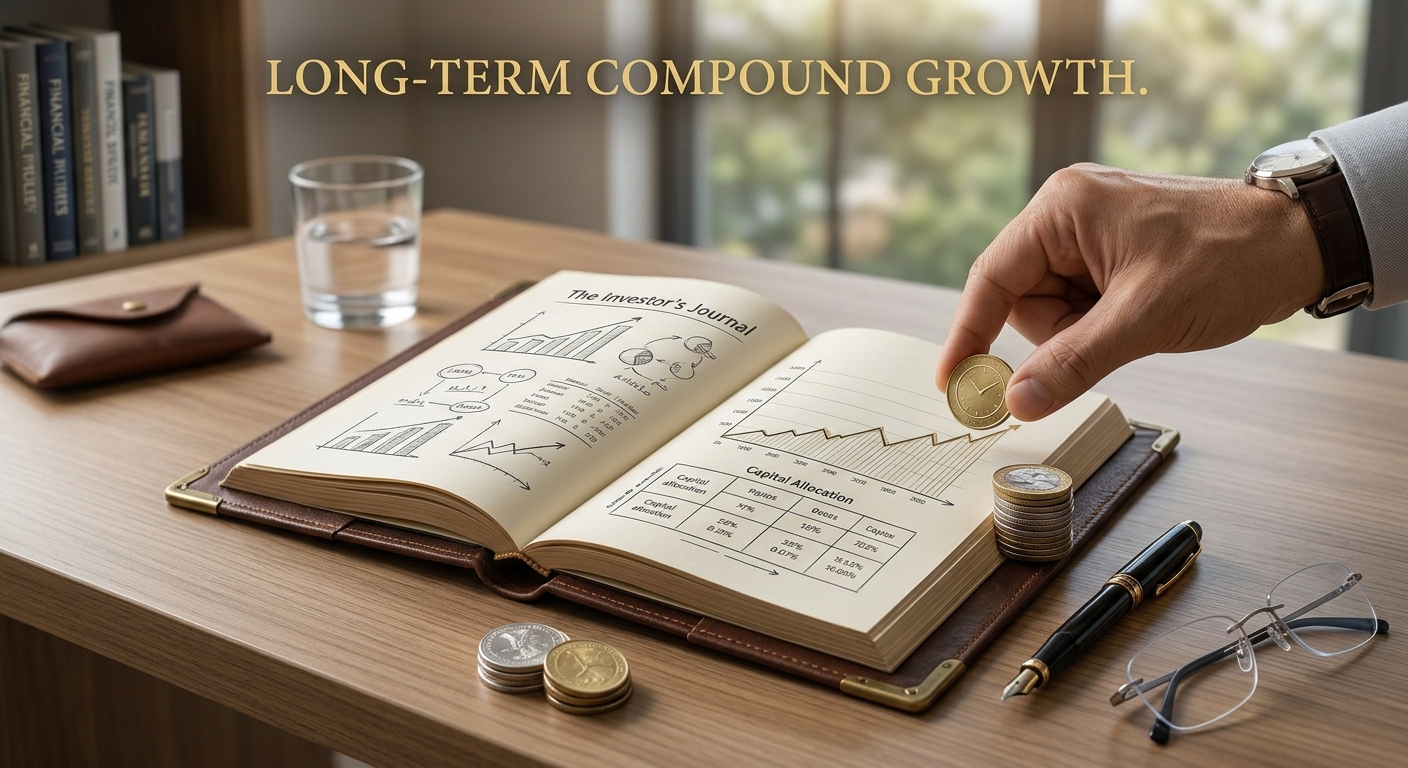
If the Liquidity Cycle represents the market's heartbeat, investor psychology represents its emotional pulse. The hardest thing an investor will ever do is not analyze a financial model or pick a stock, but control the intense psychological urge to react emotionally during periods of extreme market stress. This internal battle is often where portfolios are either safeguarded or irreparably damaged.
The behavioral gap—the difference between the market's theoretical return and an individual's actual return—is largely attributed to emotional decision-making. Two powerful evolutionary forces dominate this terrain: Fear (Panic) and Greed (FOMO). During a significant drawdown, the fear of total loss triggers the primal 'fight or flight' response, often compelling investors to sell assets at the exact moment valuations are most attractive, violating the fundamental "buy low" principle.
Conversely, during an extended rally, the fear of missing out (FOMO) leads to "chasing performance," pushing investors to buy into market tops when asset prices are already overextended, directly violating the "sell high" principle. In both scenarios, emotional impulses, rather than logical analysis, drive the decision.
The journal entry for navigating these psychological mines is simple but difficult to execute: Trust the Thesis. If your long-term investment strategy is fundamentally sound, a temporary period of market volatility should not alter your convictions. Developing the patience to remain invested—even when it hurts—is the signature trait of the sophisticated capital allocator. The market often acts as a mechanism for transferring wealth from the impatient to the patient. Mastering your internal pulse is as vital as analyzing the external market.